Glassine, cellophane, poly, greaseproof, parchment: to a shopper they all look like the thin see-through bag around a cookie or a print. To a buyer specifying packaging, they behave completely differently in three ways that matter, namely how clearly they show the product, how well they hold back grease and moisture, and what happens to them after use. Choosing by habit or by whatever a supplier calls “clear bags” is how brands end up with plastic they meant to avoid or paper that soaks through. This comparison lines the common options up against glassine so you can pick on properties rather than on the label.
What actually makes glassine glassine
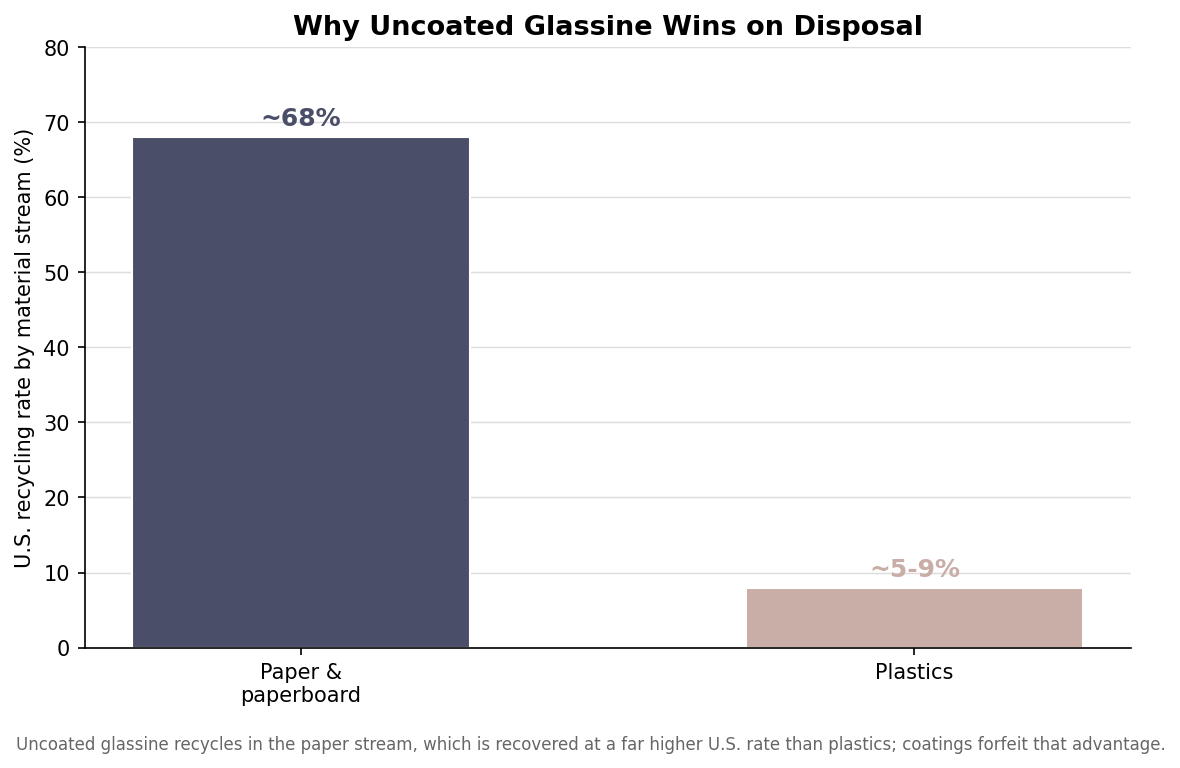
Glassine starts as ordinary wood-pulp paper and earns its glassy, translucent surface through supercalendering, a finishing step that runs the sheet through heated high-pressure rollers until the fibers are compressed and the internal air gaps that scatter light are squeezed out. That mechanical densification, not a plastic or wax coating, is what gives uncoated glassine its grease resistance and smooth finish. The distinction is the whole story on disposal: because the barrier is structural rather than a coating, uncoated glassine stays a pure paper product that is acid-free, neutral in pH, recyclable in the paper stream, and compostable at home or industrially where the inks and adhesives also qualify. Add a silicone or barrier coating for tougher moisture performance and you generally forfeit both the recyclability and the compostability.
Glassine versus cellophane, and the plastic in disguise
This is where buyers get caught. True cellophane is made from regenerated cellulose, a wood- or cotton-derived material that is genuinely biodegradable, but most bags sold today as “cellophane” are not cellophane at all. They are BOPP, a biaxially oriented polypropylene film, which is a crisp, glass-clear plastic that heat-seals beautifully and is excellent at holding moisture out, but is not compostable and behaves like any other plastic at end of life. If sustainability is part of your pitch, never accept “cellophane” as a spec without confirming whether it means regenerated cellulose or BOPP plastic. Glassine sits between them on clarity, offering translucency and partial product visibility rather than the perfect transparency of BOPP, but it keeps the plastic-free, paper-stream disposal that neither poly nor BOPP can match.
Glassine versus clear poly bags
Clear poly bags, usually low-density polyethylene or polypropylene, win on two counts: total transparency and a genuine heat-sealable, moisture-resistant closure that keeps humidity out for long storage. Where they lose is disposal and story. Thin film plastic is difficult to recycle curbside and typically has to go to a source-separated drop-off, while uncoated glassine rides the ordinary paper stream that the U.S. recovers at a far higher rate.
There is an honest counterpoint worth stating: glassine is not automatically the greener choice by every measure. It usually starts from virgin fiber and carries a higher manufacturing carbon footprint than an equivalent thin plastic film, and plastic can be made with recycled content. The reason most boutiques and bakeries still prefer glassine is the combination of a paper look and feel, plastic-free marketing, and a disposal path their customers actually understand, not a claim that it beats plastic on every lifecycle metric.
Glassine versus greaseproof and parchment
All three resist grease without a plastic coating, but they are tuned for different jobs. Greaseproof paper is made from the same refined pulp taken further into an ultra-dense sheet, giving it a matte, opaque surface and stronger resistance for genuinely high-fat foods. Parchment adds a treatment that tolerates oven heat, which is why it lines baking trays. Glassine offers only good grease resistance, ample for lightly greasy or dry items such as cookies, chocolates, soap, stamps, and prints, but it is the wrong pick for prolonged contact with very oily food, where greaseproof does better. Glassine’s advantage over both is that glossy, semi-transparent surface that lets the product show through, which is exactly why it reads as premium retail packaging rather than a kitchen liner. None of them is waterproof; glassine slows moisture transfer but will eventually absorb water under prolonged contact, so it is a presentation and short-term protection material, not a submersion barrier.
Matching weight to the job
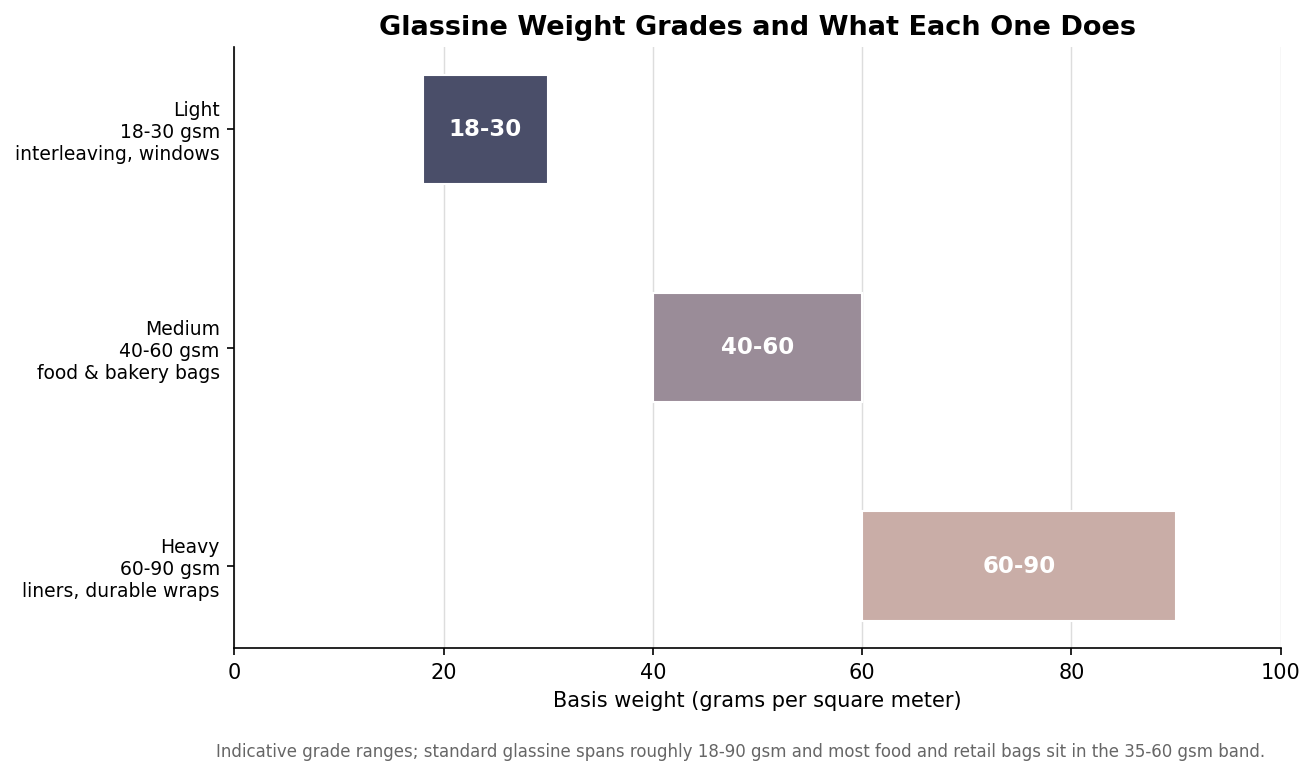
Once you have chosen glassine, weight is the specification that most affects how the bag performs and feels. Standard glassine runs roughly eighteen to ninety grams per square meter, and the grade you pick should follow the contents. Light stock around eighteen to thirty gsm suits interleaving sheets, envelope windows, and tissue-style wraps where the paper only has to separate or veil. The middle band of roughly forty to sixty gsm is the workhorse for food and retail bags, heavy enough to hold a pastry or a bar of soap and take a clean print. Heavier stock past sixty gsm goes into release-liner bases and durable wraps that need to survive handling.
One last practical note on closure: because glassine is paper, it does not heat-seal the way BOPP or poly does, so plan to close it with a fold, a printed sticker, a tab, or an adhesive strip rather than a sealed bar. Decide that early, because it affects both the machine time on a packing line and the look on the shelf. And whatever grade you land on, confirm the specific stock is certified food-grade to the relevant FDA or regional standard before it touches anything edible, since food contact compliance is a property of the certified sheet, not of glassine in general.